Shopify vs Etsy vs Amazon (2026): Which Platform Is Right For You?


TL;DR: Shopify is the winner. If you're serious about building an ecommerce business — not just listing products somewhere — Shopify is the only platform on this list that actually gives you ownership. I've run stores on both WordPress and Shopify, and the difference is night and day. A top-tier Danish ecommerce bureau — one of the three most recommended in the country — told me straight: if you're building something real, you build it on Shopify. Not Amazon. Not Etsy. Shopify. Here's the honest breakdown of all three so you can see exactly why.
The Question Nobody Asks First
Most people starting out in ecommerce ask: "Which platform is best?"
That's the wrong question.
The right question is: "What do I actually want to achieve?"
Because Shopify, Amazon and Etsy are not competing for the same customer. They serve fundamentally different purposes. And understanding that difference will save you months of wasted effort — and potentially your entire business model.
I've been through the platform journey myself. WordPress dropshipping store first — then a branded Shopify store in the Danish market. I never sold on Etsy and I never seriously considered Amazon as a primary channel. But I researched both hard before committing — and I've spoken to enough store owners to know where each platform takes you.
Amazon: Visibility You Don't Own
Amazon is the world's largest online marketplace. Hundreds of millions of active buyers. Products moving at scale. Built-in trust. If you list something on Amazon today, you're immediately in front of people actively looking to buy — without building an audience, without running cold traffic ads, without establishing brand trust from scratch.
That sounds great. And for certain use cases, it is.
But here's what nobody tells you clearly enough upfront: you are a guest on Amazon's platform. You don't own the customer. Amazon does. Your buyer gets an Amazon confirmation email, an Amazon delivery, an Amazon return experience. Your brand is a footnote.
What Amazon does well:
- Instant access to a massive global buyer base
- Built-in trust through the Amazon brand
- FBA handles storage, packing, shipping and returns
- No need to build a website or marketing funnel from scratch
What Amazon doesn't do:
- You don't own the customer relationship — Amazon does
- Your brand is secondary to the Amazon experience at every touchpoint
- You're competing with thousands of sellers, including Amazon itself on popular product categories
- Fees eat hard into your margins — FBA fees, referral fees, advertising costs stack up fast
- Limited control over store appearance, customer communication and post-purchase experience
What didn't work for me: I never went all-in on Amazon — and the bureau conversation confirmed why. When I asked about scaling a branded ecommerce store, Amazon wasn't even on the table. The feedback was clear: Amazon is fine for moving commodity products. It's not a brand-building platform. If you want to own your business in five years, you can't build it entirely on someone else's marketplace.
Amazon is right for you if: You want visibility from day one, you have a product that sells on its own merit, and volume matters more than brand ownership right now.
Amazon is wrong for you if: You want to build a brand, own your customer relationships, and scale a business that's genuinely yours.
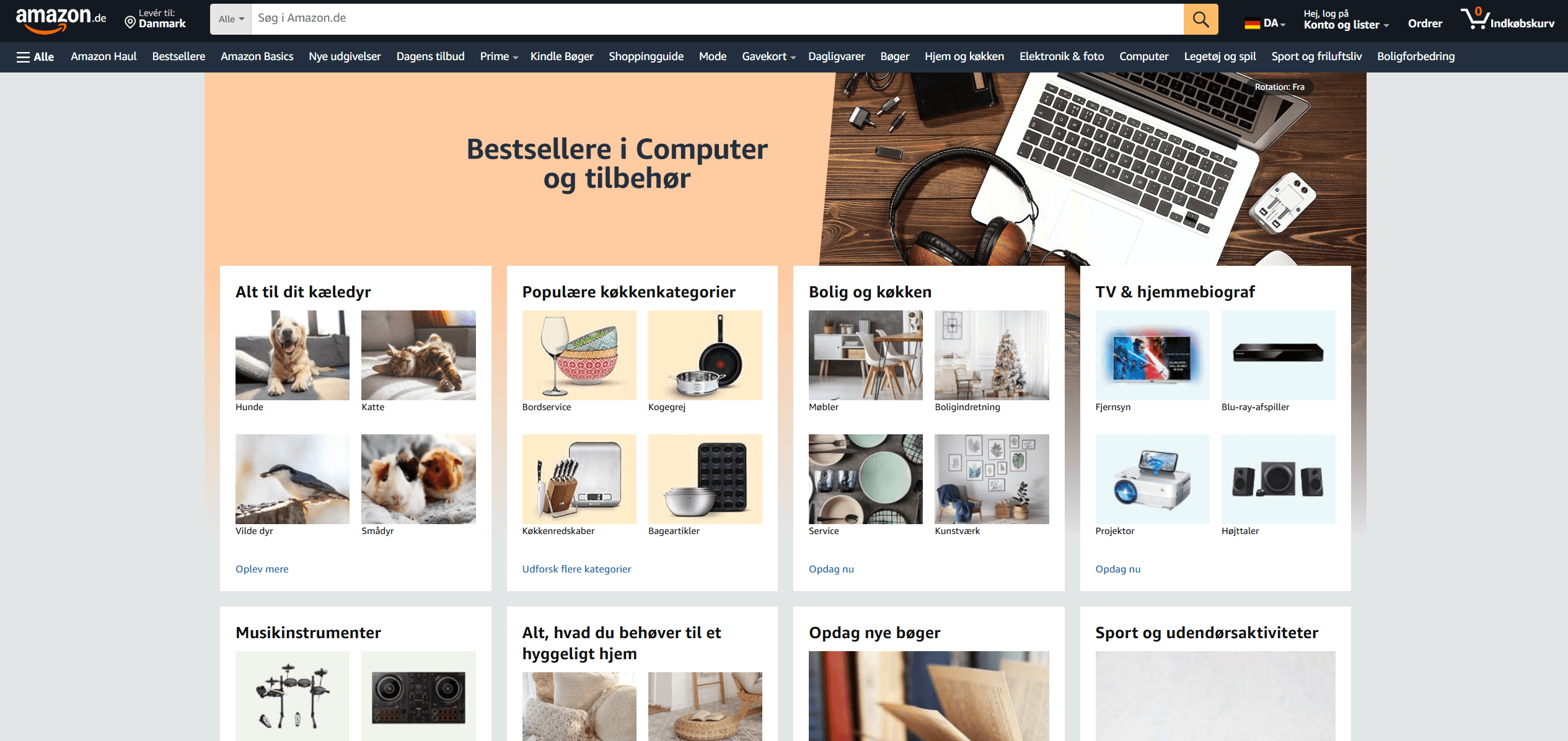
Look at Amazon's homepage below. Categories, Amazon campaigns, Amazon branding everywhere. There is no room for your brand in this picture.
Etsy: Simple Selling With a Hard Ceiling
Etsy is a marketplace built specifically for handmade, vintage and unique products. It has a dedicated buyer base that actively searches for exactly the kind of products Etsy sellers make — gifts, jewellery, art, personalised items, homeware with a handmade angle.
I've never sold on Etsy myself. But I've spoken to people who have, and the pattern is consistent: Etsy is genuinely good at what it does — right up until it isn't enough anymore.
What Etsy does well:
- Built-in audience actively searching for handmade and creative products
- Extremely simple to set up — you can be listing products within hours
- Low barrier to entry and low technical overhead
- Strong community and seller support for creative businesses
- Less ecommerce complexity to manage day-to-day
What Etsy doesn't do:
- Your shop looks like every other Etsy shop — limited branding control
- You don't own the customer relationship — Etsy does
- Transaction fees, listing fees and payment processing fees add up and compress margins
- Scalability hits a wall — Etsy is built for creators, not growing ecommerce operations
- You're completely dependent on Etsy's algorithm and policy changes
What didn't work for me: I looked at Etsy seriously early on when I was figuring out where to start. The simplicity was appealing. But the ceiling was obvious — if I wanted to run email marketing with a tool like Klaviyo, build a real brand, use proper analytics, run paid traffic to my own store — Etsy just doesn't give you the infrastructure for that. It's a great place to sell. It's not a great place to build.
Etsy is right for you if: You make handmade, vintage or creative products, selling is secondary to creating, and you want the simplest possible path to your first sales.
Etsy is wrong for you if: You want to build a serious ecommerce brand with full control over your marketing, customer data and long-term growth.
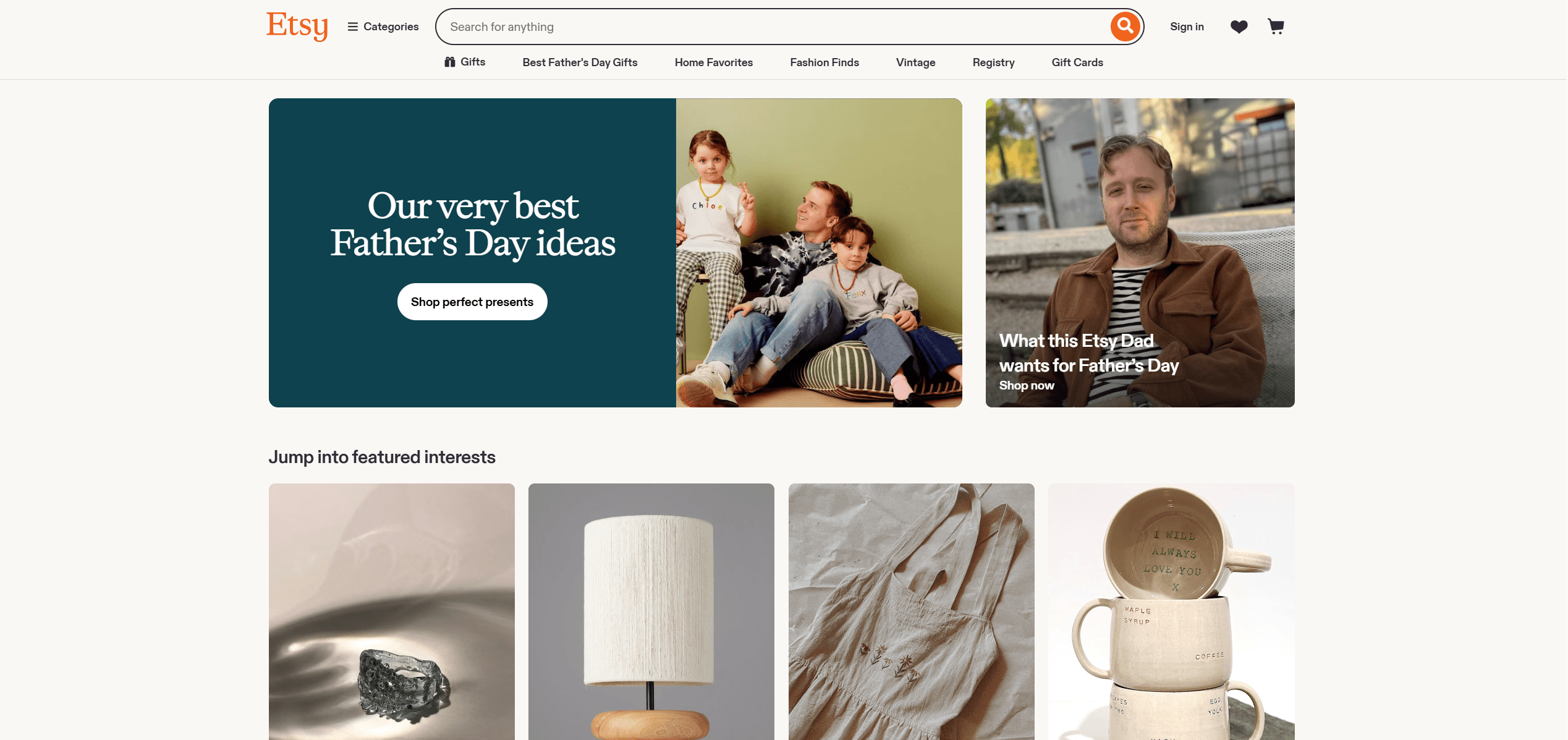
Same story on Etsy. Father's Day ideas, Etsy's campaign, Etsy's brand. You're a listing inside their marketplace — not a brand people come back to find.
Shopify: Built for Serious Ecommerce
Shopify is not a marketplace. It's a dedicated ecommerce platform built for one purpose — to help you sell online on your own terms.
Unlike Amazon and Etsy where you're operating inside someone else's ecosystem, on Shopify you own everything. Your store. Your brand. Your customer relationships. Your data. Your marketing stack.
I've been running a Shopify store in the Danish market since late 2024. Before that I was on WordPress for 20 months — and the difference in how a Shopify store actually runs day-to-day is significant. The checkout is cleaner. The app ecosystem is better. The operational overhead is lower. And when I spoke to one of the top three Danish ecommerce bureaus about where serious Shopify brands are built — the answer was Shopify, above everything else on this list.
What Shopify does well:
- Built specifically for ecommerce — the checkout, the backend, the app ecosystem, all of it
- You own your store, your brand and your customer relationships completely
- One of the best checkouts in the world — conversion optimised out of the box
- Massive app ecosystem covering every ecommerce need: subscriptions, upsells, bundles, email marketing platforms like Klaviyo, analytics, loyalty
- Scales from your first sale to seven figures and beyond without needing to migrate platforms
- 24/7 customer support that actually responds
- No meaningful technical knowledge required to run and edit your store
- Full control over marketing, data, customer experience and post-purchase flows
What Shopify doesn't do:
- It doesn't bring customers to you — you need to drive your own traffic through ads, SEO or email
- Monthly subscription starts at $29/month — there's no free tier for a real store
- More upfront investment required than Amazon or Etsy to get things running properly
What didn't work for me: The app costs add up faster than you expect. Shopify's base plan is affordable but once you're running a proper email platform, an analytics tool and a couple of conversion apps — you're spending meaningfully every month. That's not a reason to avoid Shopify. But go in with a realistic picture of total monthly costs, not just the subscription fee.
Shopify is right for you if: You're serious about building an ecommerce business. You want to own your brand, control your customer relationships, and build something that compounds over time.
Shopify is wrong for you if: You want instant visibility without marketing investment, or you just want to sell a handful of handmade items without running a full ecommerce operation.
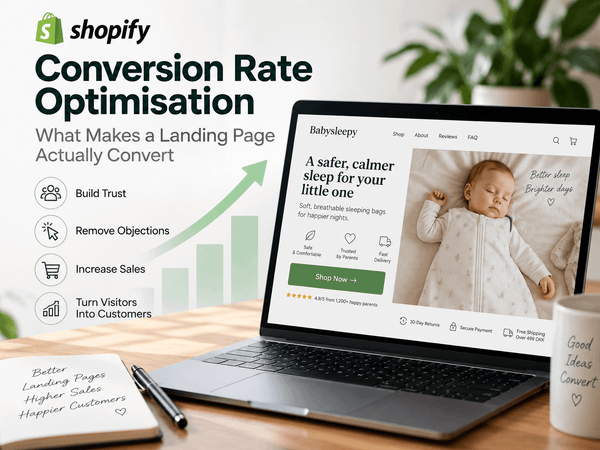
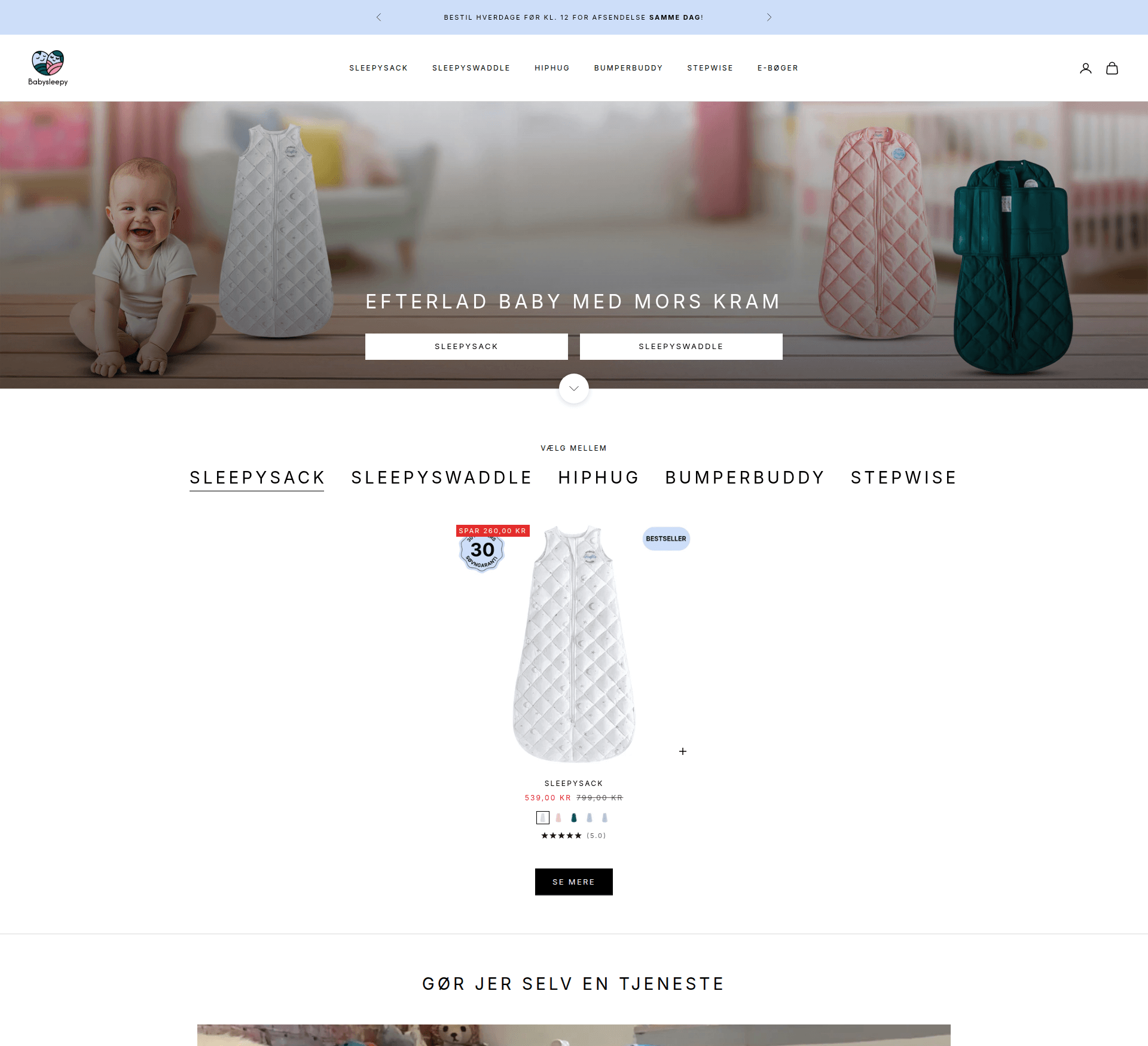
This is what owning your store actually looks like. My own store — babysleepy.dk — built entirely on Shopify. My logo, my design, my brand voice, my customer. No Amazon header. No Etsy template. Nobody else's logo in sight.
Side-by-Side Comparison
| Shopify | Amazon | Etsy | |
|---|---|---|---|
| You own the customer | ✅ Yes | ❌ No | ❌ No |
| Brand control | ✅ Full | ❌ Minimal | ⚠️ Limited |
| Built-in audience | ❌ No | ✅ Yes | ✅ Yes (niche) |
| Scalability | ✅ Unlimited | ⚠️ Volume only | ❌ Hard ceiling |
| Email marketing | ✅ Full control | ❌ Not possible | ❌ Very limited |
| Monthly cost | From $29/mo | $39.99/mo + fees | Free + per-transaction fees |
| Best for | Building a real brand | Moving volume fast | Handmade / creative sellers |
Which One Is Right For You?
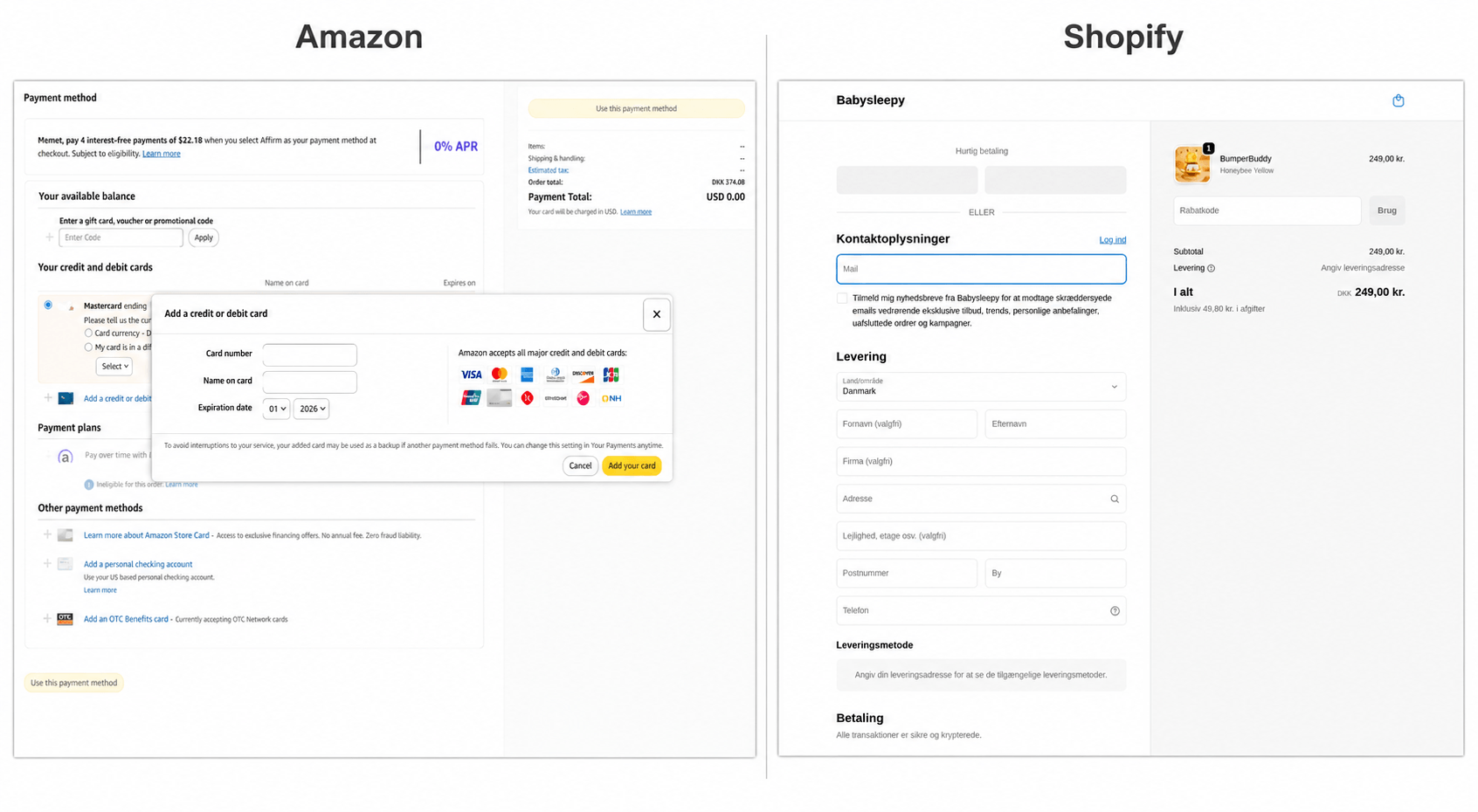
Choose Amazon if: You want instant visibility from day one, you have a product that sells on its own merit, and you're optimising for volume over brand ownership. Just go in clear-eyed — you're building on rented ground.
Choose Etsy if: You make handmade, vintage or creative products and selling is secondary to creating. Etsy is genuinely the simplest path to your first sales in that niche. But have a plan for what comes next.
Choose Shopify if: You're serious about ecommerce. You want to own your brand, your customer relationships and your data. You're thinking long term — scaling, paid traffic, email marketing, retention. Building a real business is the goal.

Start your Shopify store — first 3 months for $1:
My Verdict
Shopify: 9.5/10 The best ecommerce platform available for anyone serious about building a brand. The app ecosystem, the checkout, the scalability — nothing else on this list comes close for long-term ecommerce. The only reason it's not 10/10 is that app costs stack up faster than new store owners expect.

Try Shopify. You'll get somewhere within the first 10 minutes because their interface guides you so well. Set up your products, optimize your landing page for conversions and you'll be selling already. No credit card required:
Amazon: 6/10 Genuinely powerful for moving products at volume. But you're building on someone else's platform at someone else's rules. Good for product validation or a secondary sales channel. Not the foundation of a real brand.
Etsy: 6/10 Does exactly what it says on the tin — for the right type of seller. If you make handmade products and want the simplest path to sales, Etsy is excellent. But the ceiling is real and the fees add up.
If you want to go deeper on how Shopify compares to the other major platform people consider, read Shopify vs WordPress.
Frequently Asked Questions
Is Shopify better than Amazon? For building a brand — yes, by a significant margin. Amazon gives you visibility inside a marketplace you don't own. Shopify gives you full ownership of your store, your customers and your data. For serious ecommerce, Shopify is the stronger long-term choice. For moving commodity products at volume quickly, Amazon has its place.
Is Shopify better than Etsy? For most ecommerce goals, yes. Etsy is excellent for handmade and creative sellers who want simplicity over scalability. But if you want to run email marketing, paid traffic, proper analytics and build a brand that compounds — Shopify is in a different league. Many sellers start on Etsy and move to Shopify as they grow.
Is Etsy good for beginners? Yes — if you sell handmade, vintage or creative products. Etsy has a built-in audience for exactly these product types and is genuinely simple to set up. But if serious ecommerce is your goal, Etsy has hard limitations that will catch up with you.
Can I use Shopify and Amazon at the same time? Yes. Many store owners use Shopify as their primary store while also listing on Amazon for additional visibility. Shopify has native integrations that let you manage Amazon listings directly from your dashboard.
Can I use Shopify and Etsy at the same time? Yes. Shopify has Etsy integrations that let you manage both from one place. A common pattern: start on Etsy to validate demand, then move to Shopify as your primary channel once you're ready to scale.
How much does Shopify cost? Shopify starts at $29/month for the Basic plan. Unlike Amazon and Etsy which charge per-transaction fees, Shopify's subscription model becomes more cost-effective as your volume grows. Factor in app costs though — a properly set up store will typically run $100–$200/month in total platform and app costs.
Is Amazon relevant in Denmark? Amazon's presence in Denmark is limited compared to markets like the US, UK or Germany. If you're selling into the Danish market specifically, Shopify gives you far more control over localisation, payment methods and customer experience than Amazon does.
Does Etsy charge fees? Yes. Etsy charges a $0.20 listing fee per item, a 6.5% transaction fee and payment processing fees on top. These compress margins meaningfully — factor them into your pricing before you commit.