Shopify vs WordPress (2026): I Ran Both. Here's The Truth.

TL;DR: I ran a WordPress store for 20 months and a Shopify store for 17. WordPress cost me between 9 and 12 months of setup time and generated 7K from 5,000 products. Shopify generated 7 figures in gross revenue with 2 products. If you're serious about ecommerce, stop reading Facebook advice and keep reading this instead.
The Worst Advice I Ever Took
There's an old saying: free advice is worth exactly what you paid for it.
I learned that the hard way.
When I was starting out I did what most people do — I went to Facebook entrepreneur groups and asked which platform I should build my ecommerce store on. The answer came back overwhelmingly: WordPress. It's cheaper. More flexible. More freedom.
What I didn't realize at the time was that most of the people giving that advice were developers. And developers love WordPress — because WordPress needs developers.
They weren't lying. WordPress is flexible. WordPress does give you freedom. But that advice had nothing to do with what I actually needed, which was to sell products and make money.
That distinction — between what a platform can do and what it will do for your business — cost me nearly two years of my life.
My WordPress Story: 20 Months, 5,000 Products, 7K Revenue
I started my WordPress store in late December 2022. Hosted on Simply.com initially, then moved to Contabo when the site kept going down.
Here's the number that tells the whole story: I spent somewhere between 9 and 12 months just trying to get the website to look the way I wanted it.
That wasn't the plan. The plan was to run an ecommerce business. Instead I was fighting with plugins, chasing developers, writing to Plesk, contacting Simply.com and Contabo trying to figure out why my website was breaking down multiple times a week.
Nobody had an answer.
The only solution I found was to keep upgrading my hosting — throwing money at a problem I couldn't identify. And even then, one small edit could take the entire website down.
I want to be clear — I'm not exaggerating. One little edit. Website down.
And the worst part? You won't be able to fix most of it without either hiring a developer or being really technically sharp on WordPress. And I mean really sharp.
After 20 months of running a dropshipping store with around 5,000 products, I had generated roughly 7K in revenue.
That number tells you everything you need to know about where my energy was going. It was going into keeping the website alive — not into selling.
Why I Switched to Shopify
After 20 months on WordPress I attended a webinar that kept appearing as a Meta ad. It was about branded ecommerce — a completely different approach to what I had been doing.
The concept was simple but it hit hard:
- Stop dropshipping thousands of generic products
- Build a brand around a focused product selection
- Find products with proven demand globally but low availability in your local market
- Use a platform built specifically for ecommerce
That last point led me to Shopify. And the branded ecommerce concept led me to rethink everything about how I was approaching my business.
My Shopify Story: 17 Months, 2 Products, 7 Figures
I opened my Shopify store in late 2024.
I have not had a single downtime since.
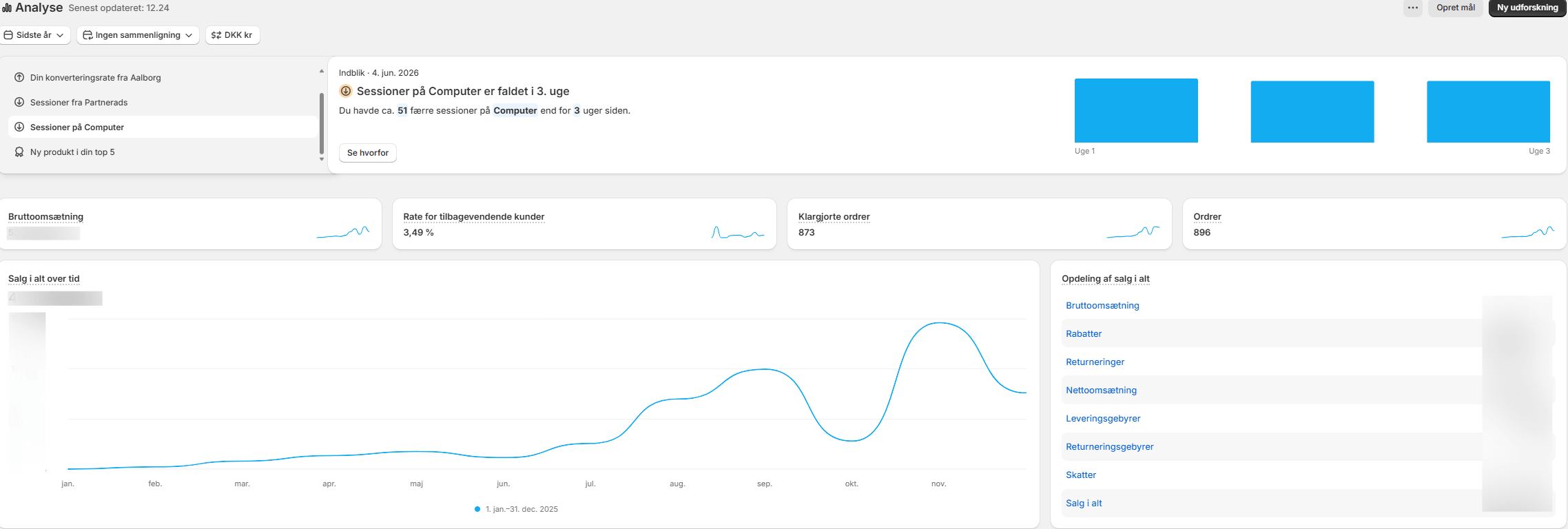
I edit my theme without touching a line of code — most of the time. I upload products, edit images, make quick changes — all without a developer. Things that took me weeks on WordPress take me minutes on Shopify.
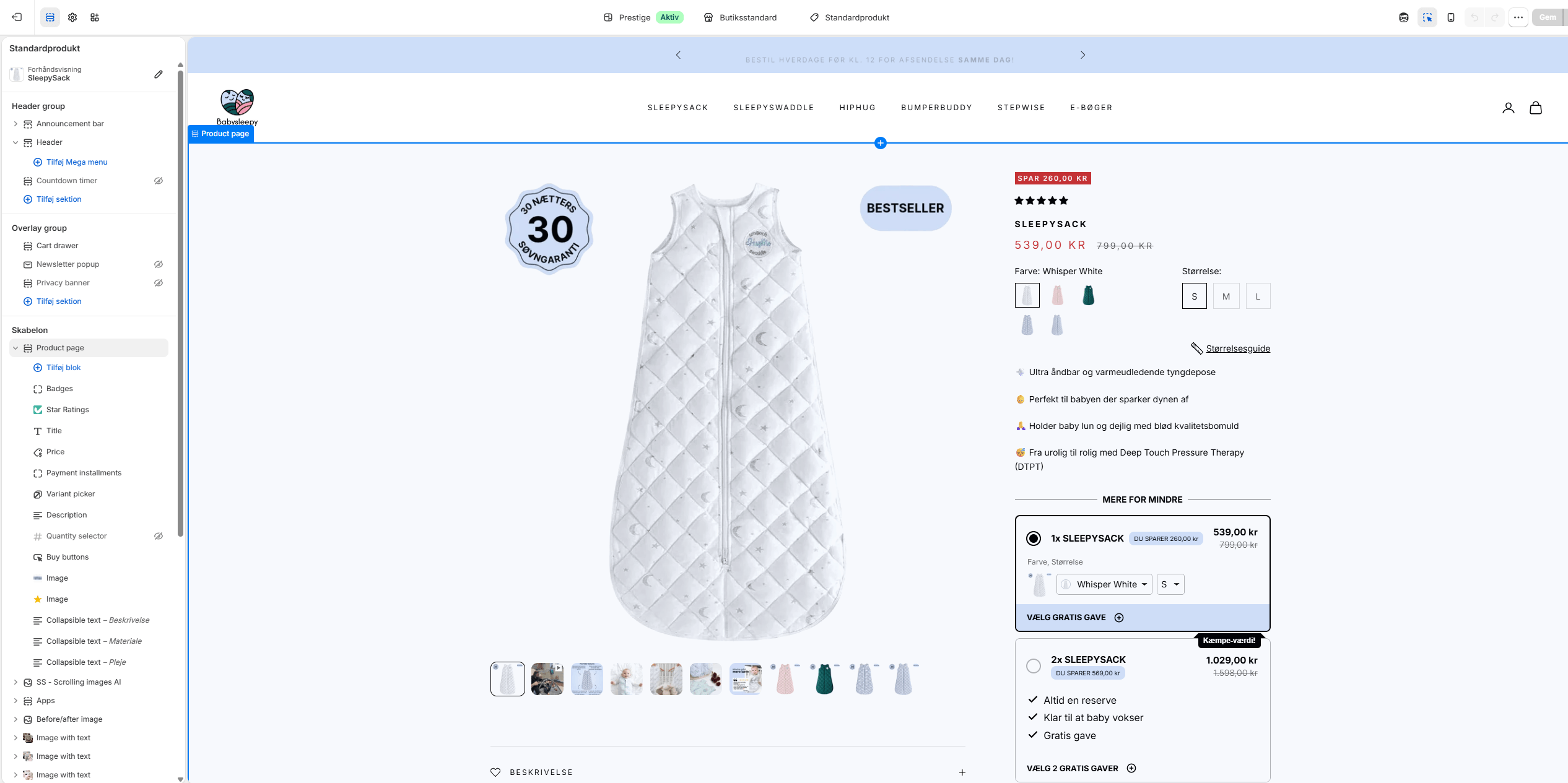
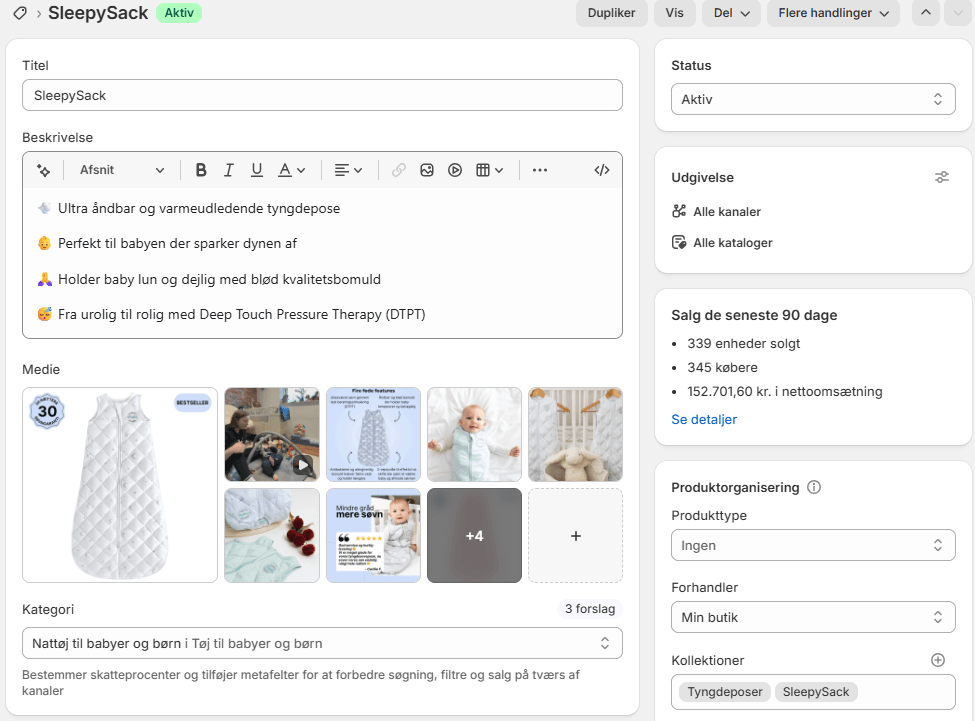
But here's what really tells the story:
With 2 products on Shopify I generated 7 figures in gross revenue.
Compare that to 7K from 5,000 products on WordPress over 20 months.
Now I want to be honest — Shopify alone didn't do that. Three things came together:
- The right platform — Shopify, built specifically for ecommerce
- The branded ecommerce concept — focus, identity and trust
- The right products — high demand globally, low availability in Denmark
But would any of this have been possible on WordPress? No. I would still be fighting with plugins and calling developers at 1am trying to figure out why my website went down again.
What Shopify Got Right (From Someone Who Switched)
I've been on Shopify for 17 months now. Here's what genuinely worked — no sales pitch, just experience:
The setup speed is real. I had a live, functional store within a day. No hosting to configure, no PHP errors at 2am, no WooCommerce extension conflicts. You pick a theme, add your products, connect your payment provider and you're selling.
Theme editing is a pleasure. The visual theme editor is genuinely intuitive. Drag sections, adjust colors, rearrange layouts — no code required and no fear of breaking anything. Coming from WordPress where theme customization meant child themes, CSS overrides, and prayer — this was a revelation. My store looks exactly how I want it to look and I built it myself.
The app ecosystem is plug-and-play. I currently run Kaching Bundles, Klaviyo, TripleWhale, Judge.me, Shipmondo and more. Every single one installed in minutes and worked immediately. On WordPress I spent entire weekends getting plugins to talk to each other.
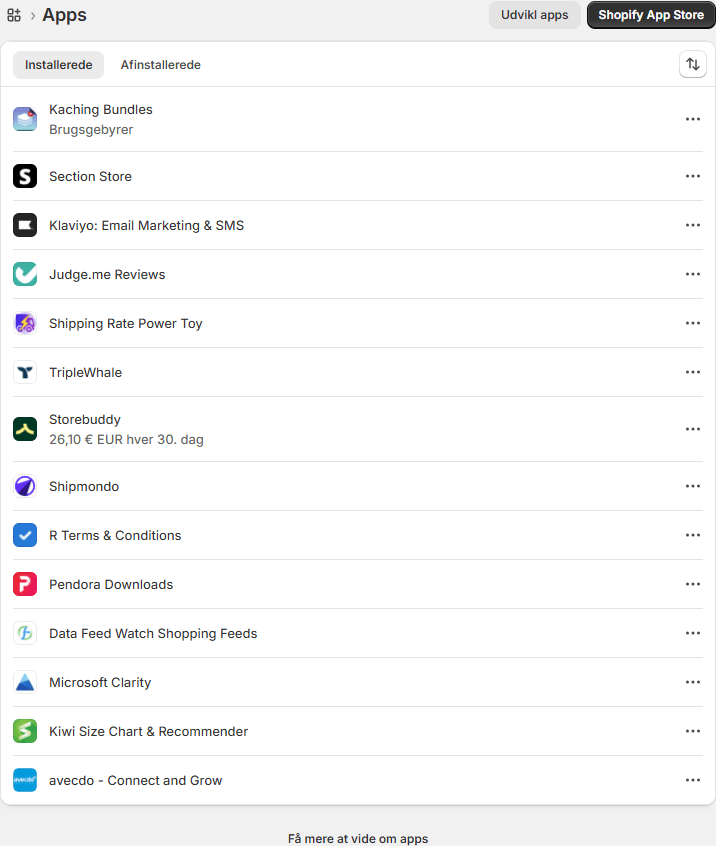

If you want to go deeper on email marketing, I use Klaviyo on my store — read my full Klaviyo review to see why it's the best email platform for Shopify stores.
Shopify Payments removed friction I didn't know was hurting me. No third-party gateway, no extra transaction fees, payouts directly to my bank. Simple. If you're unsure which payment setup is right for you, I've compared all three options in detail in Shopify Payments vs Stripe vs PayPal.
Performance is handled for you. My Shopify store loads fast without me touching a single setting. On WordPress I was obsessing over caching plugins, CDN configuration and Core Web Vitals just to stay competitive.
Scaling didn't break anything. Going from low volume to 7-figure gross revenue on the same plan, same setup. Nothing broke. No hosting upgrade emergencies, no database timeouts. WordPress cannot say the same.

Do you consider building your own store?
You get 3 days completely free and afterwards a total of 3 months for a symbolic 1$.
You'll get familiar with the Shopify theme builder within the first 2 hours, so you have plenty of time think about when to upgrade and start selling.
Where Shopify Frustrated Me (Being Honest)
No platform is perfect. Here's what actually matters from an ecommerce perspective — and I'm only including things that are genuinely relevant to running a store:
Checkout customization is locked unless you're on Shopify Plus. If you want serious control over your checkout flow — custom fields, specific upsell logic directly at checkout — you hit a wall on standard plans. I've worked around this with Kaching apps, which handle upsells and bundles excellently. But it shouldn't require a workaround. If subscriptions are part of your model, check my Best Shopify Subscription Apps guide for what actually works.
Carrier-calculated shipping requires a higher-tier plan. If you want real-time shipping rates from carriers like PostNord, GLS or FedEx displayed at checkout, you need to be on the Advanced plan or above. On Basic and standard Shopify you either set manual rates or pay for a workaround app. For a serious ecommerce store this is a meaningful cost that catches people off guard.
A handful of Liquid edits are unavoidable. Shopify is 95% plug and play — but that last 5% will require you to dip into the theme's Liquid code. Common examples: showing payment provider icons on your product page, hiding tax lines from the cart, small display tweaks that no app covers. None of it is difficult once you find the right snippet online, but if you've never touched code it can feel daunting the first time.
Is WordPress Really Cheaper Than Shopify?
This is the argument you'll hear most from WordPress advocates. And on the surface it's not wrong.
But as my grandfather used to say — the cheap option is only cheap until it isn't.
Here's the honest breakdown:
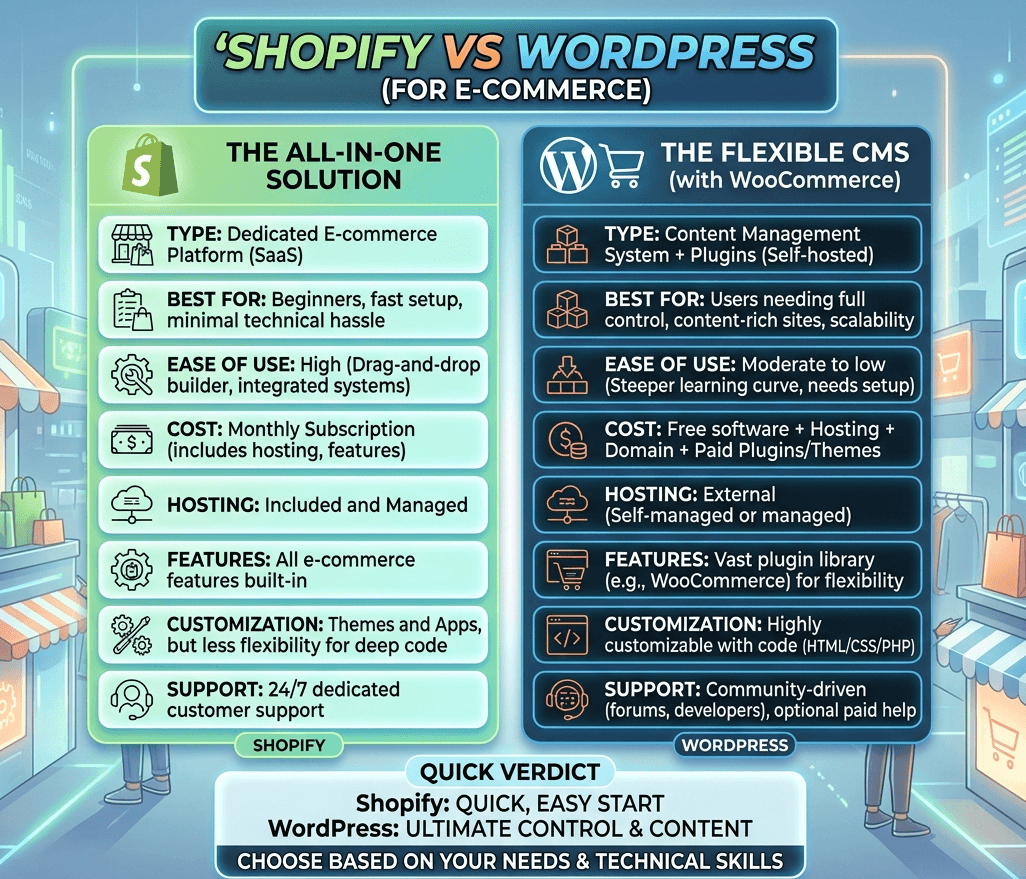
|
|
WordPress / WooCommerce |
Shopify |
|---|---|---|
Monthly platform cost |
Lower |
Higher |
Developer costs |
High |
Minimal |
Hours spent on setup |
Hundreds |
Minimal |
Downtime risk |
High |
Minimal |
Theme editing |
Complex |
Drag and drop |
App conflicts |
Common |
Rare |
Checkout quality |
Variable |
World-class |
Customer support |
Community forums |
24/7 dedicated |
Scaling reliability |
Unpredictable |
Consistent |
When you factor in the hours you'll spend setting things up, the money you'll pay developers, the hosting upgrades to keep your site running and the sales you'll lose to a suboptimal checkout — WordPress is not cheaper.
And that checkout matters more than most people realize. Shopify's checkout is one of the highest-converting in the world. That alone can justify the subscription cost.
When WordPress Actually Makes Sense
I'm not here to bury WordPress entirely — that would be dishonest.
WordPress/WooCommerce genuinely makes sense if:
- Content is your primary focus and ecommerce is secondary — if you're a blogger or publisher who also sells a few products, WordPress is probably the right call
- You have developer resources available — if you have an in-house developer or a reliable agency on retainer, many of WordPress's pain points disappear
- You're optimizing for every kroner of platform cost at very low volume — if you're just starting out and money is extremely tight, WordPress is cheaper to run before you're making real revenue
If none of those describe you — and they probably don't if you're reading a comparison post on an ecommerce review site — Shopify is your answer.
My Verdict: Shopify vs WordPress
I've built stores on both platforms. I know what it feels like to wrestle with WooCommerce at midnight because a plugin update broke checkout. I also know what it feels like to scale a Shopify store to 7 figures without a single platform-related emergency.
The verdict is not close.
Shopify wins for ecommerce. Full stop.
I switched from WordPress to Shopify and went from 7K revenue to 7 figures in gross revenue. I'm not saying Shopify caused that — the products, the marketing and the focus did. But Shopify never got in the way. WordPress constantly did.
There's another old saying: the best time to plant a tree was 20 years ago. The second best time is now.
I wasted 20 months on the wrong platform. Don't make the same mistake.
|
Platform |
My Score |
|---|---|
Shopify |
9.5/10 |
WordPress / WooCommerce |
6.5/10 |

Start Your Free Shopify Trial:
Frequently Asked Questions
Is Shopify better than WordPress for ecommerce?
Yes — if ecommerce is your primary goal. WordPress offers more general flexibility but requires significantly more technical knowledge, developer assistance and ongoing maintenance. Shopify is built specifically for selling online and it shows at every step.
Is WooCommerce better than Shopify?
For pure ecommerce, no. WooCommerce gives you more flexibility and lower platform costs, but that flexibility comes at the price of time, technical maintenance and developer dependency. For most store owners the tradeoff is not worth it.
Is WordPress really cheaper than Shopify?
On the surface yes. But when you factor in hosting costs, developer fees, plugin costs and the hours spent on maintenance — Shopify is almost always the more cost-effective choice for serious ecommerce. I spent 20 months finding this out the hard way.
Can I switch from WordPress to Shopify?
Yes. Shopify has migration tools and there are apps specifically designed to help you move your products, customers and orders from WordPress/WooCommerce to Shopify. The switch is easier than you think.
Do I need a developer to use Shopify?
Almost never. That's one of Shopify's biggest advantages over WordPress. You can edit your theme, manage products and run your store entirely without technical knowledge — with a handful of minor Liquid code exceptions that a quick Google search will solve.
Have you run both platforms? Or are you considering switching from WordPress to Shopify? Feel free to reach out — I'm happy to talk through it.